


When looking at these two filters, it’s important to establish what each is first before examining both of their benefits for you.
What is Activated Carbon?
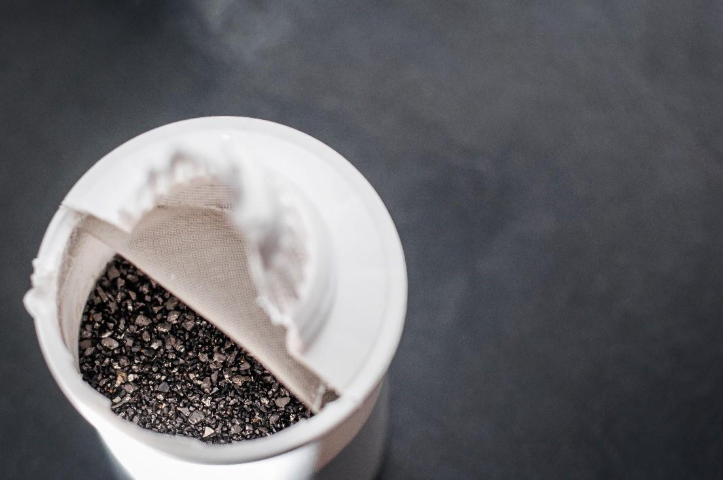
Activated carbon, (also known as activated charcoal) is a highly porous material with an extremely large surface area. The base material of carbon is typically a coconut shell or coal. It performs as an adsorbent, removing contaminants from water in this process as the impurities bind to millions of microscopic pores.
It’s best at removing organic pollutants such as VOC’s (Volatile organic compounds), chlorine, as well as contributing to the removal of bad taste and unpleasant odours in water.
Where can I use Activated Carbon?
We would see this type of filter used in a wide range of settings such as household, commercial and industrial environments. For example, for a household it may be used as part of an under/sink system as a single point of use – used to help purify your water. Alternatively, it can be used for the entire house at the point-of-entry as part of a whole-house filtration system.
In addition to this, it can be used within a pitcher filter as they commonly use carbon when removing chlorine from the water. This is done to improve the taste by helping to eliminate the metallic and chemical taste.
Away from drinking benefits, the benefits of this type of Water Filtration can extend to your skin too. By using this in a shower filter, your experience can be more pleasant for your skin as chlorine gets removed from the water. The chlorine would usually dry out your skin and hair as it strips out the natural oils your skin has. As such, the Activated Carbon Filter within a shower filter can lessen the irritation on your skin so both skin and hair is better protected.
What is Catalytic Carbon?
Meanwhile, catalytic carbon chemically destroys the impurities and converts harmful substance into safer ones. It is treated with specific high temperatures that change the chemical structure on the carbon surface. The contaminants stick to the surface of the carbon which in a process known as adsorption.
It is much more effective at breaking down chloramines than the activated version, converting it into a harmless chloride instead. Not only this, but it is also better at removing volatile organic compounds than activated carbon as well as removing iron and manganese.
However, it is worth noting that opting for the catalytic version is generally more expensive than activated carbon as the manufacturing process involved is more intensive.
Another advantage of this version of water filtration is the breaking down of hydrogen sulphides. These are responsible for the rotten egg smell and bad taste (commonly found in well and ground water).
Overall, Catalytic Carbon would be better at breaking down contaminants, but you have to consider this is the more expensive option of the two.
Where can I use Catalytic Carbon?
You can also use this is in a whole house filtration system to help improve both the taste and odour of water in your home. As well as this, you can also use it in an under-sink and countertop units.
A well water system can also benefit, particularly as it can remove high levels of hydrogen sulphide here.
Though you can use it alone, to boost its effectiveness it is best practice to combine it with GAC (granular activated carbon).
Furthermore, you can use Catalytic carbon in a RO (reverse osmosis) system. It’s used before the RO membranes in order to shield them from oxidation by chloramines.
Should I use an Activated or Catalytic Carbon Filter?
In summary, if you just require an improvement in the taste and odour in your household water, then your best option would be to opt for the activated carbon filter. However, if you want to also remove chloramines or hydrogen sulphides then catalytic would be better for this purpose. The latter will be more effective if you have well water that emits the sulphur smell. However, it’s worth noting that this option is more expensive so if you are on a lower budget, it may not be the best option for you. The activated carbon filter would be lower cost and is ideal for a more general type of water filtration.