


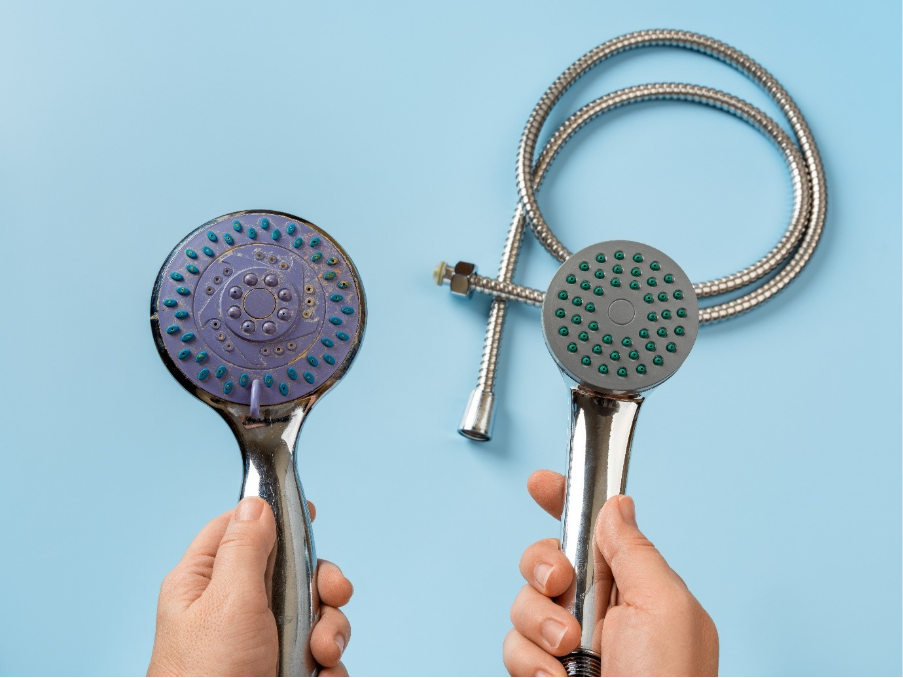
Hard water simply means water that is high in dissolved minerals like calcium and magnesium. Soft water however, has a low amount to dissolved minerals. Note, it is often higher in sodium (salt) though, due to the process of water softening.
The latter is far more gentle on your skin and better for your hair too. There’s also numerous household benefits when you use soft water. Meanwhile, for the purpose of drinking water, you would be better off with hard water due it’s higher mineral content.
How can I get soft water?
In order for you to reap the benefits of soft water, you would need to invest in a water softener unit. The most efficient one would be one that is salt based. It uses Ion Exchange Resin to swap the hard water causing minerals like calcium and magnesium to sodium ions. As a result, the water now exiting the unit is soft.
In the UK, a standard water softener roughly starts from £600 to £1200 at the higher end. This is including the installation carried out by a professional. For a unit that uses ion exchange resin, you can be expected to be paying between £5 – £20 a month for the salt to be refilled, (depending on your water consumption).
Benefits of Soft Water
There are numerous benefits for your household when you switch to using water from a water softener. Limescale doesn’t build up in appliances like kettles, dishwashers etc – so you get longer lasting equipment.
When cleaning, you’ll find the soap and detergent now lather more efficiently. Now, you will need to use less of the product so the cleaning product last longer than before. Not forgetting, you also don’t need to be scrubbing away limescale from tiles and sinks anymore.
In terms of laundry, clothes can appear brighter and soft. Previously the minerals would end up in fabric fibres. This would in turn leave a residue behind. Thanks to the removal of calcium and magnesium, there is no mineral there to accumulate.
Meanwhile, in your kitchen you can say goodbye to streaks and spots on your glassware as they dry without the mineral deposits. Of course, soap scum is also taken out the equation as the use of soft water means dish soap can wash away entirely and not leave you with those pesky marks.
Away from the kitchen benefits and household appliances, soft water is superior to hard water when it comes to your skin.
If you suffer from irritation and dryness, then soft water can really be a relief for sensitive skin. When soap residue dries, it can cause itching so by taking the magnesium and calcium, The soap can completely rise away. Natural oils can also be preserved as minerals often strips away the skin’s natural oils.
Benefits of Hard Water
Though soft water does have numerous benefits to the body externally, it doesn’t mean necessarily mean it’s better. In fact, for the purpose of drinking it’s advised to do the opposite. It’s noticeable difference to hard water is that it lacks the same essential minerals that you would otherwise receive when drinking Hard Water.
The calcium and magnesium is important for your bones/skeletal health, dental health and your bodily functions. Soft water is not necessarily bad to drink on occasions for adults, but it’s much better practice to have an intake of hard water so you get the essential minerals. For preparing baby formula though, you must avoid using this as the excess sodium can exceed a baby’s sodium limits. Of course, adults that are on low sodium diets should also avoid soft water drinking as well.
Summary
Overall, it must be noted that for appliance protection and reducing limescale in your house, investing in a water softening unit is a good long-term investment. This is due to a trio of cost saving factors: you save money on energy bills, appliances start lasting longer and the need for cleaning products diminishes (as you require less of the product to use).
Those suffering from skin conditions like eczema may notice a reduction in their condition severity when using softened water, so it can be worth trying to see if it helps you. However, for the purpose of drinking water – you should be opting for hard water to ensure you receive the vital mineral benefits.