


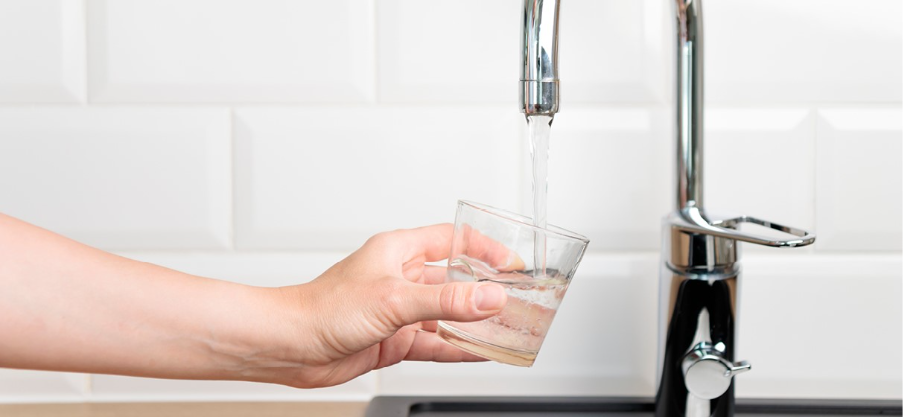
PFAS continues to run havoc in our water supplies in the UK. Long term exposure to these “forever chemicals” has been linked to numerous health concerns including, but not limited to: increased risks of cancers, suppression of our immune system, thyroid issues, problems with fertility and more.
These synthetic chemicals don’t break down naturally so are frequently found within our water supplies. Though the UK government has put forward their first PFAS plan to combat this, there is of course still many methods we have for PFAS removal. This includes the use of Ion Exchange Resins.
What causes PFAS to get into our water?
It’s virtually impossible to get away from. They mainly come into contact with us through our everyday products and industrial waste.
For example, a factory that makes electronics will often have waste that has forever chemicals which then go onto end up in nearby bodies of water. It’s been going on for decades and it’s not just limited to this source. Landfills can end up leaching the chemicals into the soil which go onto end up in aquifers (underground rock area that accumulates groundwater). These chemicals are incredibly durable and have built up overtime and gone onto contaminate water supplies.
Solution for PFAS Removal
We can use the chemical process of ion exchange to remove the contaminants from water. It’s a highly effective method that has an impressive rate of removal rate typically between 95-100%. It’s important to note that the longer-chains of PFAS are more effective at being removed than shorter chain variants of PFAS.
How can I remove PFAS from my drinking water at home?
A great solution is to use a targeted removal point-of-entry system. Hydra’s total PFAS reduction model is perfect for giving you safer water for your family at home, or in a commercial setting too.
This specific model uses the resin manufactured by the industry leaders ResinTech (SIR-110-HP) and covers you for both the removal of long and short chain PFAS compounds.
Benefits of Ion Exchange for removing PFAS
A great advantage of opting for ion exchange resins for PFAS Treatment is its superiority to other methods such GAC (Granular Activated Carbon). You can get a wide range of PFAS captured through resin, including short-chain PFAS.
Secondly, the capacity is far higher, often up to 20x more PFAS removal capacity. GAC uses physical adsorption as its method for removal, whilst the ion exchange process has much better hold of the PFAS molecules so for effectiveness, there is only one clear winner here.
A review featured within an abstract in the National Library of Medicine, puts forward that this method is great for fixing PFAS contamination within surface water, ground and industrial effluent.
Its remarkable efficiency is backed up by the EPA (Environmental Protection Agency) who approved of this as a reliable water treatment when it comes to PFAS.
How does Ion Exchange remove PFAS?
It works by the positivity charged anion exchange resin beads attracting negatively charged PFAS ions. Water passes over these resin beads and the PFAS molecules get swapped out for harmless ions (typically chloride) that then gets released into the water whilst the beads hold onto the PFAS.
This exchange/swapping chemical process is done at a microscopic level. A great benefit of this method of water treatment is that it doesn’t strip away the essential minerals such as magnesium or calcium in the water.
Your body needs these essential minerals for its body functions, as well as for preserving the good, refreshing taste of water, (not flat tasting). Of course, its easily absorbable too through water.
These water minerals are used for supporting your heart, muscles, whilst the calcium is important for your bone and teeth health.
Why is PFAS Removal important for drinking water?
No matter the treatment method used, we should understand why we want to eliminate this in our water. Simply put, there are a lot of health conditions that long term exposure of this has been linked to such as fertility issues, thyroid problems and certain types of cancers.
The use of Ion Exchange Resin remains an industry favoured and highly efficient choice for tackling these pesky forever chemicals.
FAQ
Is Ion Exchange resin good for getting rid of PFAS?
Yes, it has a highly effective removal rate of between 95-100%.
Is it safe for drinking water?
Yes, the use of ion exchange resin doesn’t release harmful chemical into the water as long as you use the certified NSF/ANS-61 standard resin.
How should I use this for PFAS removal at home?
We typically see the resin used in the polishing stage after water has travelled through a sediment filter and a pre-treatment like GAC.
Where can I get ion exchange resin for PFAS?
We have a fantastic range of ion exchange resin and specifically, resin that is appropriate for targeted PFAS removal. An ideal choice is the SIR-110-HP on our website.
Is ion exchange good for short-chain PFAS Compounds?
Yes, this is what gives it a distinct advantage over GAC.