


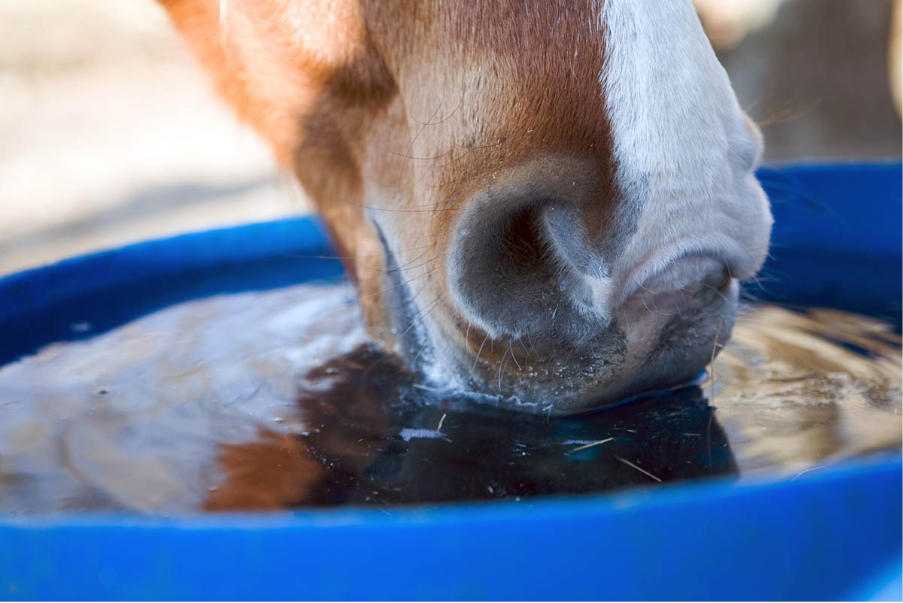
Adequate water is vital for your horse’s health. A horse that does not get enough will end up dehydrate and run into problems with energy levels, kidney functions, gut issues and more.
It’s not just ensuring the right amount though, it has to be of high quality. Horses will often voluntarily drink less if they encounter water quality issues such bad odours, poor tastes and any chemical contaminants (like excessive amounts of chlorine). Not forgetting, a pH that it too high or low can also impact the volume of which they drink. Just like in humans, unpleasant water tastes can be very off putting!
As horses are unable to vomit, they rely on their acute sense of smell and taste to protect themselves from poisoning.
Water quality problems for Horses
As well as the above, some further issues that can case your horse to drink less include:
- High amounts of TDS (total dissolved solids)
- Extreme temperatures. Water shouldn’t be too hot or too cold for horse consumption. Typically, equine water should be 20°C / 68°F.
- Blue-green algae. The growth of this toxic cyanobacteria causes a very strong odour resembling rotten grass and a slimy texture. This is absolutely not safe for consumption.
- Strong smells like sulphur (rotten-egg odour) in the water
- Agricultural run-off such as fertilisers and nitrates
High Iron levels in water
The Paulick Report (for horse related news and equine welfare discussion) highlights the issue of high iron levels in horses, which can be fatal in some cases. Whether that’s from grass or water, when it’s a high level overtime – it can lead to chronic iron overload for the animal.
Improve horse health with better water quality
You can make big improvements to adequately hydrate your horse.
In the water treatment industry, a popular choice for removing chlorine and controlling the growth of microorganisms is KDF-55 Media. This a copper-zinc alloy of high purity that performs extremely well across many applications. Often used at homes in a point-of-use system, it can be used to provide fresh, high quality water for your horse.
By using an inline filter cartridge housed in a standard canister water filter housing, you can refill the KDF-55 media resin as needed. Built for professional water treatment applications, this filtration media is widely praised for drastically improving taste, odour and safety of water.
How does KDF-55 Media help equine water?
- Reduces chlorine!
- Heavy metals are removed.
- Bacteria & algae growth is inhibited.
- More appealing, (no metallic or chlorine) tasting water that your horse will naturally be more inclined to drink.
- A horse’s sensitive stomach won’t be at risk from biofilm (bacteria and slime) in the water. A stomach upset can lead to colic which can be a medical emergency for equine health – stopping the growth of this biofilm is vital for protecting the digestive system.
If you require fresh, clean water that your horse won’t turn their nose up at, then you should consider this type of filtration media, available on the Resin Products website.
Testing water quality
Getting a water analysis for horses is a straightforward process. Simply order a kit online from an accredited providers website in the UK for equine centred water analysis. Follow their instructions, then mail back to the lab. Their team will then report the water quality back to you vie an email.
They will test for things like acidity or pH levels, the water pH, calcium and magnesium levels and the TDS levels. As well as these, they will test nitrate levels – high amounts would suggest agricultural pollution from commercial crip fertillisers. Other parameters of testing in the lab report would include regarding minerals, like sodium and chloride for example.
Summary
Proper hydration is a crucial part to maintain a healthy, active horse. From helping their digestion, to protecting them from illness. It’s crucial that they get enough and that it’s free of contaminants. Understanding the risks of improper water is the first to ensuring your animal is receiving adequate care and ensuring it can have a happy, hydrated life.
FAQ
What does KDF stand for?
This means Kinetic Degradation Fluxion.
How much of a horses body is made up of water?
Roughly 70% of a horses body is made up of water.
How can I get my horse to drink more water?
Keep it fresh and clear off bad tastes/smells. A filtration system that uses kdf-55 media is a perfect addition.
How can I make my KDF-55 media last longer?
If you have well water that has dirt and sand, then the mud will actually coat the KDF-55 granules. This means the water can’t touch the metal, thereby negatively affecting the ability of the KDF-55 media.
Will KDF-55 media help reduce heavy metals in my water?
Yes, one of it’s many benefits is that it will remove metals like nickel, mercury, and lead, amongst others.