


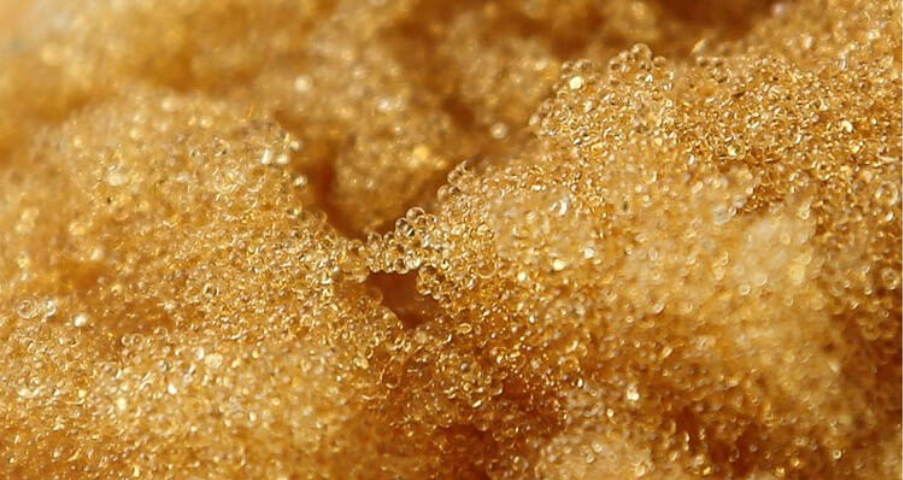
In water treatment, it’s not only important to understand ion exchange resin uses but also the difference between cation and anion resin.
What is a Cation resin?
Firstly, let’s look at cation. This ion exchange resin removes cations from the water (it attracts the positive ions). This type of resin bead will release a different ion into the water, (which is typically sodium or hydrogen), to replace the mineral it has trapped. Hence, the term ion “exchange”.
What is an Anion resin?
Meanwhile, an anion resin is the opposite of cation – it has a positive electrical charge that will attract anions from the water (negatively charged ions). In the exchange process, it will release chloride or hydroxide.
So, what is the difference between cation and anion resin?
The important difference here to takeaway are the resin charges.
| Type of resin | Charge |
| Cation | Negative |
| Anion | Positive |
Now we’ve established the different chemical make-up of these beads, let’s look at what they are used for within the world of industrial ion exchange resin.
Applications of Cation Resin
Typically, we see cation Exchange resin used in water softening for the removal of the hardness causing ions Ca²⁺ and Mg²⁺ (calcium and magnesium). Other uses include:
- Both demineralisation and deionisation
- Industrial water purification
- For boiler feed-water treatment
- Removal of heavy metal
- Food & beverage (to purify organic solutions like fruit juices)
Applications of Anion Resin
- Water demineralisation
- Sulphate removal
- Nitrate removal
- Deacidification
- Organic removal
- Arsenic removal
- Dealkalisations
What are the groups in these two different types of resin?
We can split both anion and cation resins into two further groups for each. For cation, this would be: Strong acid cation and weak acid cation. Meanwhile, for anion we split this into the two groups of strong base anion and weak base anion.
Real world examples of each resin
Strong acid cation uses
The most common uses include water softening and for polishing water. Industrial and chemical uses include purifying biodiesel and pharmaceutical purification. A good example of this type is the ResinTech CG8-HP resin which is widely used across softening in municipal and residential applications.
Weak acid cation uses
Meanwhile, for a strong acid cation, you could use ResinTech WACMP-NA for the purpose of heavy metal reduction. A weak acid cation is used across industrial and chemical processing for applications like purifying antibiotics and also sugar processing.
Strong base anion uses
A strong base can be used for silica and carbon dioxide removal, condensate polishing and more. For example, if chromates are a concern, then ResinTech SBG2-HP is an excellent choice for removing this from the water.
Weak base anion uses
A weak base anion resin is designed primarily for taking out mineral acids and organic acids. The water treatment industry uses this for wastewater treatment to take away dangerous ions such as hexavalent chromium. One of these types we sell in this category is used in glycol purification (ResinTech PX-A70-OH)
Important considerations when determining your resin
There are some key factors relating to the operation that you should look out when selecting which ion exchange resin you need. You should be aware of the operating capacity, as this will tell you the level of contaminant the resin can take before it’s exhausted and then needs to be regenerated. Along with this, you should also make sure the size of the resin bead and its structure can handle the systems flow rates – without it causing damage to the bead or a very high drop in pressure. The water temperature and any suspended solids should be taken into consideration too. This list is by no means exhaustive, but it’s important to be aware of these factors in order to get the right ion exchange media for you.
Water treatment resin in the UK
As official UK distributors for ResinTech & Aries products, we are more than happy to supply you with your ion exchange resin needs. Once you’ve determined your application, you can get in touch with the Resin Products team who will help guide you on the correct resin for your application. Simply reach out by emailing enquiries@resin-products.com
FAQ
What is an ion exchange resin bead made out of?
Polymer beads that are specialized with chemically active ionic groups.
Which type of resin do I need to treat hard water?
A strong acid cation resin.
Which ions does an anion resin attract?
They attract negatively charged ones like chlorides and sulphates.
Which ions does a cation resin attract?
These capture positively charged ions such as calcium or magnesium.
Are there resins that use both?
Yes, we call this a mixed bed resin. A blend of strong acid cation and strong base anion exchange resin together within a vessel.