


What is DI Water?
Known as DI water, deionised water is free of almost all of its minerals, thus making it very pure.
It is purified through an ion exchange process which removes positively charge ions and negatively charged cations. The first being ions like sodium, magnesium, calcium and iron and the negatively charged ions sulfate, chloride and nitrate.
As a result of this, what you are left with is a type of pure water that has very low electrical conductivity. It is worth noting though that the process does not remove uncharged organic molecules, bacteria or viruses it is only the mineral ions which are removed.
Lab Uses
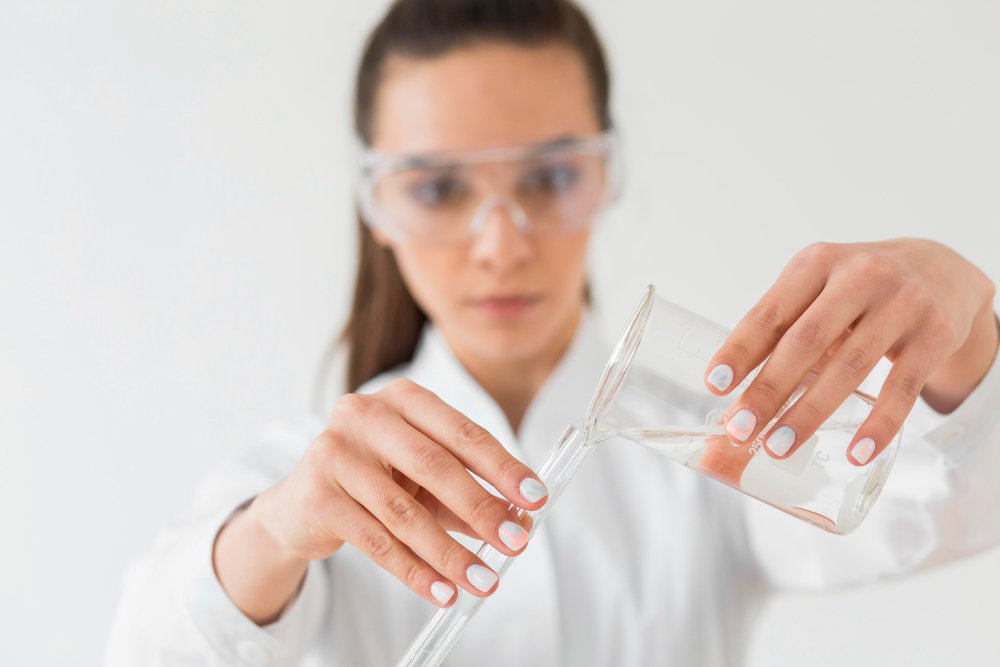
A deionised water system can be really beneficial for lab procedures, where this industry requires even the smallest impurities to be removed.
One way we can use this is for chemical analysis. It can be used to prepare the solutions for chemical analysis. Results from this analysis using this water benefit from the lack of ions in the DI water.
Regular water would have trace minerals which can cause scaling and deposits in lab equipment. However, the lifespan of equipment such as autoclaves and spectrophotometers for example can be extended when deionised water is used instead.
Its uses are quite broad in this industry. From preparing reagents, running analytical instruments, culturing cells to the cleaning of glassware. It can be put into practice in chemistry and biology labs.
Industrial Uses
For the purpose of Industrial use, deionised water is used in power generation. When used as feedwater for high-pressure boilers, scaling is prevented as well as corrosion. As a result, high-pressure systems lifespan can be extended.
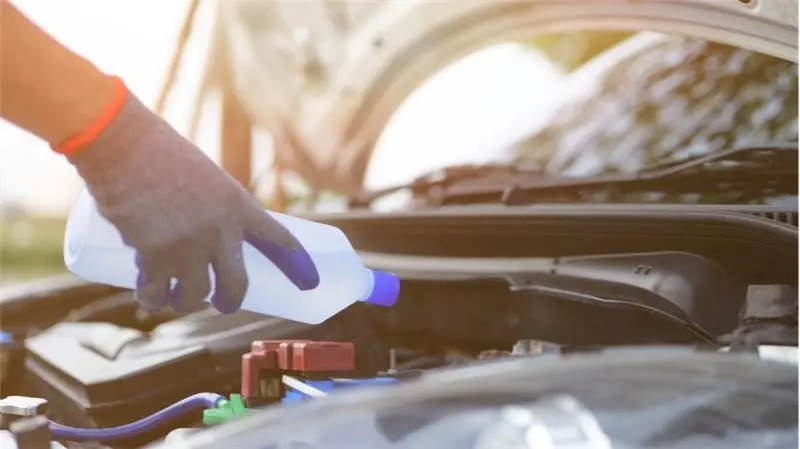
Resin Products stock mixed bed resins such as MBD-15 which are often used for car detailing to produce the ultra-pure spot-free water used in the process of washing and rinsing.
In the automotive sector, spot-free rinsing can be achieved in both the painting and finishing process. Using it for the final rinse will help in better preserving the wax and sealant finishes. You can buy deionised water in the automotive section of some supermarkets in the UK.
It is minerals like calcium and magnesium that would usually be causing the water spots when drying on the surface, but as discussed earlier, these minerals have been removed in the ion exchange process when making deionised water.
Deionised water vs Distilled water
Simply put, distilled water is different. It has been purified by boiling it into steam and condensing it back into a liquid form. The minerals and impurities are left behind.
Over 99.9% of dissolved minerals, salts and contaminants are removed.
Where it differs to deionised water is that distilled removes most bacteria and viruses through a boiling and condensation process, whereas DI water is through ion exchange resins and doesn’t deal with biological contaminants.
Therefore, distilled will be favoured in applications that require the removal of bacteria, viruses and organic compounds (this is in addition to the removal of minerals).
For example, in surgical irrigation solutions and the sterilizing of instruments in dentistry or medical. It’s the more ;expensive of the two types of water here as the production of this takes longer.
Mixed Bed Resins Specific Applications
MBD-15-Ultra meanwhile is ideal for ultrapure water applications that need extremely low levels of TOC (Total Organic Carbon) and high resistivity.
The electronics industry benefit from the production of MBD-Nanoas this type of mixed bed resin is used to create E-1.1 grade water. It has high temperature applications but is limited to 140°F (60°C).
In semi-conductor manufacturing, MBD-Nano is perfect. The ultrapure water used here is vital when rinsing semiconductor wafers to remove metals, trace impurities as well as organic compounds that would be at risk of causing defects in integrated circuits.
Summary
To conclude, the benefits of a deionised water system are vital for those that work in laboratories. Moreover, the production of ultrapure water extends its use to industrial practices too as well as for lab purposes. Not forgetting, the electronic industry makes good use of mixed bed resins such as MBD-Nano. It is vital for creating the ultra-high purity water required when a TOC of no more than 2ppb is needed.
Finally, it is important overall to consider what level of purity you need in your water or whether distilled or deionised is suitable for your application.