


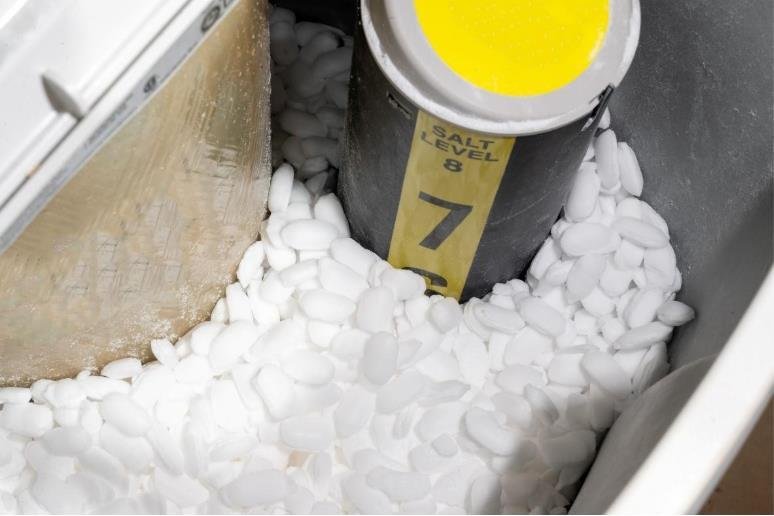
A Water Softener is a type of filtration system that is concerned with removing minerals that cause hard water – these are mainly calcium, magnesium and iron.
For anything up to 3ppm of iron, our CG8 resin works perfectly. For anything above 3ppm, then CN8-F Resin will work instead.
This type of water treatment is carried out through a process referred to as ion exchange.
How does a Water Softener work?
When the hard water enters the tank, the resin beads attract hard water minerals and replace these with sodium or potassium ions (ion exchange). Now that the calcium and magnesium have been removed, the new softened water can exit the system. Over time, the Resin Beads will become saturated with calcium and magnesium ions, so they cannot continue softening the water. Therefore, a salt brine solution is used.
Known as the regeneration cycle, this works by flushing the mineral tank with this solution from the brine tank – this then flushes out the calcium and magnesium along with wastewater.
How much would a Water Softener unit cost?
Typically, in the UK, you can expect to pay anywhere from £400 to £2,500 for a water softener system. At the higher end of this, you are looking at larger commercial systems whereas at the starting range of £400, these are going to be single cylinder systems.
Installation
Not only should you consider the unit itself, water softener installation and general maintenance should be factored in.
Generally, installation is around £350. Note, this is variable with the labour rates of your plumber as well as space and access in your home where other costs may incur based on the location and how feasible this would be with plumbing modifications too. The complexity of your specific unit should then be considered in the installation costs.
Maintenance
There are some essential costs for the maintenance of your water softener system which include:
- £5-15 for the salt (depending on usage)
- Electricity – minimal consumption – most systems do not use high amount of power.
- Annual servicing £50-£120. This is recommended every 1-3 years – a more premium system may require less servicing.
What do I get in the servicing?
A professional system inspection and check of:
- The unit performance
- Resin bed
- Regeneration cycle test
- Replacing/cleaning of filters if applicable to your unit.
- Advice on caring for the system and the salt usage.
Sediment Filter to boost maintenance
Substances such as iron, clay, sand, dust and debris from old pipes can interfere and clog up the water softener, causing damage. To prevent this, installing a pre-filter will remove the contaminants before it reaches the water softener water.
A key benefit of this is that the resin bed is now protected (the sediment can interfere with these beads, clogging them and thereby reducing how efficient they are).
Lifespan is increased as filtering out the abrasive particle ensures wear and tear is reduced on the unit’s internal components. This can be particularly useful if you notice cloudy water or an accumulation of sediment in appliances/fixtures.
To keep maintenance costs down and ensure your water treatment is fully optimised, it’s best practice to:
- Use high quality salt (block or tablet).
- Ensure your unit size is appropriate for your household needs. An undersized one will wear out fast whereas one that is too large is inefficient.
For salt-free systems
You may need to replace water filters too – usually for £45-£150. You can get a quote from Resin Products if you are in need of a water filter. The Aries softening cartridge uses ResinTech CGS – this is a cation exchange softening grade resin that is for residential applications. These softening cartridges will leave water soft as the hard minerals get removed.
Can I rent a Water Softener?
Absolutely. This option is ideal if you only plan to be in a property for a few months and you can avoid paying a large upfront cost. Typically, you can expect to pay between £25-£35 a month. This can include the water softener installation and maintenance, as well as breakdown cover.
Prices can start from as little as £1.16 a day but this does not include the running costs for salt (between £5-£10 a month). Note there is still the price of your water usage for regeneration which can vary.
Electric vs non-electric
In order to get the best out of your water treatment, you should decide on whether you want your water softener to be an electric unit or a non-electric version. Consider what works best for you.
With electric, regeneration can be scheduled or triggered based upon water usage. The display panels show system status and salt levels as well as error codes. This version is easier to monitor and adjust yourself.
For those wanting an off-grid option, the non-electric version won’t require a power source. With this option, regeneration is triggered by water flow and not time.
The Key Costs
As discussed earlier in the breakdown of the costs, the following displays the price you can expect to pay on average for each part of your water softening operation
| Water softening unit | £400-£2500 |
| Installation | £350 |
| Salt (if applicable) | £5-£15 a month |
| Annual servicing | £50-£120 |
| OR – renting a unit | £25-£35 a month |
| Lifespan of unit | 10-15 years |
Overall, the most important thing to remember is buying the right water softener system for your specific household needs to avoid overpaying. For those settled into a property looking for long term investment, then purchasing the unit outright would be best. On the other hand, those who are not in a property for long should consider renting.