


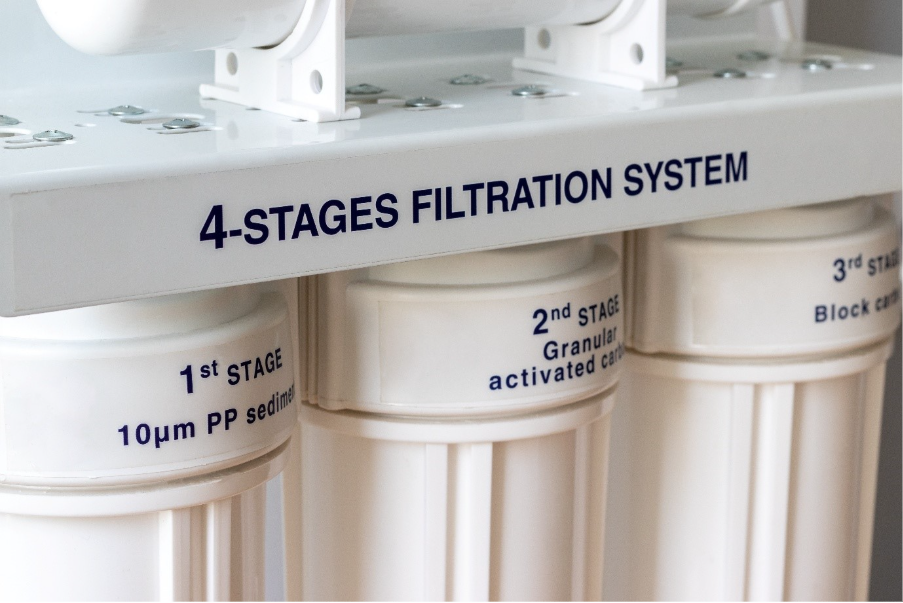
Activated carbon water filter cartridges are perfect for the removal of a variety of unwanted compounds. Your end result? Fresher tasting water.
Through the use of activated carbon, we can take out things like: Chlorine and chloramines, VOC’s (volatile organic compounds), PFAS and microplastics.
Doing this removes bad tastes and that familiar unpleasant rotten egg smell you can often find in tap water. The essential minerals are also maintained within the water, (this differs to revers osmosis which would remove them).
Household benefits of Carbon Filters
Looking at these benefits further, we can see how those seeking better tasting drinks would benefit from an activated carbon filter. Sulphur and chlorine being taken out can really alter the taste of your morning coffee and water for the better.
For those trying to minimise their chemical exposure, an activated carbon water filter will remove both pesticides and herbicides, along with PFAS. Why is PFAS a problem?
Well, these forever chemicals don’t break down and long term exposure to these has been linked to an increased risk of cancers such as thyroid and kidney. Not only this, it can suppress your immune system and even reduce female fertility.
However, it’s not just limited to your palate. The benefits are also found with your hair if you use a whole house carbon filtration system or a shower head filter. This is because chlorine strips natural oils so where you would usually be left with dry, easy to break hair. Instead, your scalps natural oils can hydrate your hair naturally and you say goodbye to split ends and breakage. It’s really about reducing your hairs exposure to chemicals here.
Do bare in mind though, whilst GAC filters can remove the chemicals, it doesn’t work by the process of softening the water so it won’t take away dissolved hard minerals.
Where else are activated Carbon Filters used?
They are used in a variety of industries. Typically, we see them across…
- Food & Beverage
For example, the food and drink industry use them to remove bad tastes and smells from the water, to ensure customers get good tasting, fresh water.
- Pharmaceutical/Medical
Within the pharmaceutical industry, this cartridge is used to remove toxic organics.
- Municipal water treatment
Granular Activated Carbon is usually used near the end stage right before the water gets sent out to be distributed to homes.
- Power generation
We would see activated carbon used here before the water ends up at the stage where it gets to equipment like reverse osmosis membranes. It’s intended for boiler feed water, pre treatment.
How does an Activated Carbon Filter work?
The brilliant process behind making this possible is called adsorption. This is different to absorption which is an internal event.
Organic contaminants/chemicals end up sticking to the porous surface of the carbon. The carbon is typically made from natural materials such as wood or coconut shells. When water goes through, the compounds are drawn to and stick to the surface of the carbon.
What a Carbon Water Filter won’t remove
As great as they are things like chlorine and pesticides, they will not remove things like calcium and magnesium. These are the hard water minerals that ion exchange resin like CG-8 can remove in order to soften the water. In addition to this, it does not target bacteria as they are too large for the process of adsorption.
Types of Activated Carbon Filters
We can split these into the following: Granular Activated Carbon, often shortened to GAC. Secondly, we have the carbon block and finally we have the Impregnated (specialty) carbon.
The first consists of loose granules within a cartridge. They’re perfect for high flow rate applications and are ideal for a whole house system
Next, we have the carbon block filters. This is activated carbon that, like its name suggests, has been condensed into a dense block. You typically see these used at point-of-use for drinking water.
Thirdly, the speciality carbon filters deal with things like dissolved lead (though do look for the lead reduction in the labelling. The cartridge should also clearly have the recognised NSF/ANSI standard 53 certification, so look out for this.
Should I get a carbon water filter
Overall, the use of water filter cartridges with activated carbon is certainly worth implementing as PFAS concerns continue to escalate in the UK and throughout the rest of our Earth. For those wanting to limit their PFAS exposure, it can be a good investment for you and your family.
Summary
Resin Products has a variety of cartridges available such as the Granular Activated Carbon (GAC) filter. They make for a cheap and effective method for eating the water for your household. You can request a quote for this filter and more in the filter cartridges section of the website by exploring the products and sending off for a quote on the product page.
FAQs
Will a Carbon Water filter improve my water?
Yes, it will do this by improving both the taste and smell through removing chlorine and sulphur.
Where can I use a carbon water filter?
Typically, you would use it in a whole house system (where water enters home) or within an under the sink system. You usually get several months use out of them. For example, a carbon block for under the sink could last up to a year, but should be at least half a year. It does depend on the amount of water you use of course.
When should I replace my water filter cartridge?
Look out for the return of chlorine tasting water or unpleasant smells.
Are these water filter cartridges expensive?
No, the GAC cartridges for example are around £10-15 in the UK.
Do I need a carbon water filter cartridge?
They are not necessary, but if your goal is to improve taste and odour, (particularly when the focus is to remove chlorine), then they are definitely a good option for your home.